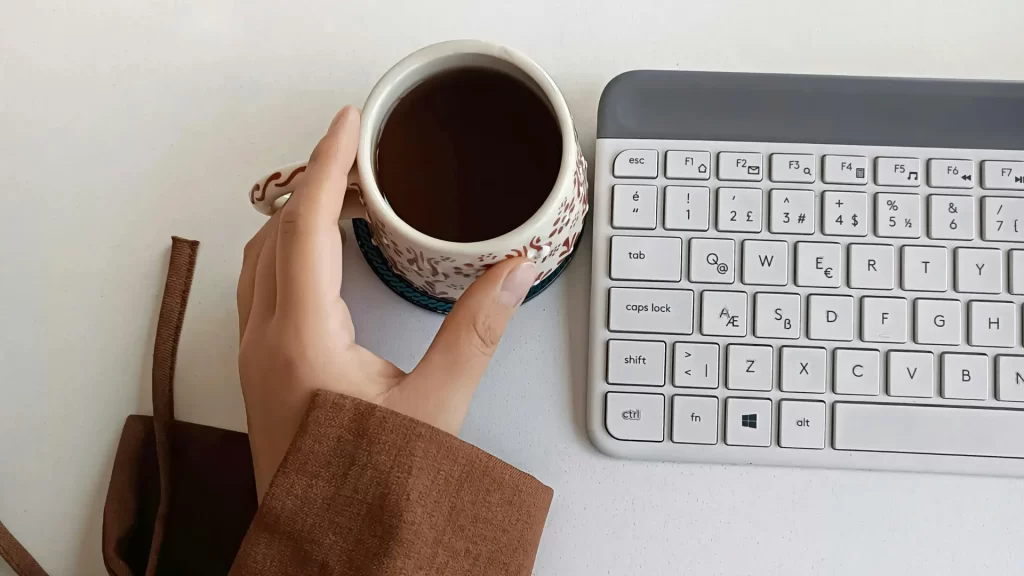
I didn’t realize I had entered my soft girl era until I began to understand soft productivity.
What I once mistook for slowing down was actually a quiet recalibration. I learned that I wasn’t falling behind when I always failed to wake up early. It was me learning to navigate life softly by listening to my energy and choosing intention over busyness.
What is Soft Productivity?
Soft productivity is a gentler, more humane approach to getting things done.
Instead of pushing yourself through rigid schedules, constant hustle, or burnout-driven efficiency, soft productivity focuses on working with your energy, emotions, and real-life rhythms.
It is about doing what matters with presence.
In your daily life, soft productivity might look like:
-doing low-energy tasks on days when you feel unproductive.
–Letting go of unnecessary busywork
-Allowing yourself to disconnect without feeling guilty.
-Having flexible to-do lists.
Soft productivity is a gentle shift towards mindful living and taking care of your mental health. It is also about being mindful of your digital habits to avoid feeling drained.
Soft Productivity Habits for Your Daily Life
Soft productivity habits are small, sustainable practices that help you make progress without burnout. It is about gentle productivity rather than unsustainable pursuit of productivity that causes burnout.
Because soft productivity includes rest, gentleness and flexibility, you may often think that you are being lazy and procrastinating. It means starting small rather than completely avoiding and escaping the task.
So, here are soft productivity habits that will ensure you make progress without being burned out.
1. Choose 1–3 priorities for the day
Start your day with jus 1-3 priorities instead of overwhelming lists.
This habit ensures you get the important things done and helps you get clarity to move through the day.
Instead of rushing into tasks, ask:
- What truly matters today?
- What would make today feel meaningful?
2. Practise Monotasking
Multitasking is a myth that actually lowers IQ and increases stress. Soft productivity embraces the “slow” approach of doing one thing at a time.
Close every browser tab that isn’t related to your current task. If you’re eating lunch, just eat lunch.
You’ll likely finish the task faster and with fewer errors because your brain isn’t constantly switching gears.
3. Work with your energy, not against it
Working with your energy simply means to notice when you feel low energy, highly focused or average.
When I get period cramps and on days when I feel low-energy, I focus on the easy tasks. On days, when I am fit and focused, I simply tackle deep work. On average days, or for a break, I also focus on decluttering tasks when I’m not too focused or not too low-energy.
Similarly, your levels of energy are different at different times of the day.
Time management assumes every hour is equal. Soft productivity knows that 2:00 PM is vastly different from 9:00 AM.
For one week, jot down your energy levels (1–10) every few hours. Look for patterns. Once you know your “Power Hours” and your “Slump Hours,” you can stop fighting your biology. You stop trying to do complex math when your brain is in “nap mode.”
Productivity improves when you stop fighting your natural rhythm.
Related: Simple Morning Habits for Energy and Motivation
4. Use gentle time blocks
Another soft productivity habit is to introduce gentle time-blocks, based on your capacity of focus. You might feel intimidated to start when you set a 3 hour long work time. Instead, you can use a shorter time span (30-45 minutes) for focused work with few minutes of restorative break after every time block.
During breaks, you can:
stretch, breathe, step outside, drink water, do squats.
Sometimes, I predecide what I’m going to use those breaks for.
Remember that rest is part of the rhythm of soft living.
5. Intentional Procrastination
Sometimes, not doing a task is the most productive thing you can do if you aren’t ready yet.
So, If you’re stuck on a creative problem, stop trying to “grind” through it. Go for a walk or wash the dishes.
This triggers the Incubation Effect. While your conscious mind is doing something “mindless,” your subconscious is actually solving the problem in the background.
6. Reduce decision fatigue by Simplifying your Choices
Simplifying choices supports soft productivity because every decision you make consumes mental energy. When your day is filled with constant small decisions, your brain becomes fatigued, overwhelmed, and more likely to procrastinate or rush tasks later.
Soft productivity protects your energy and fewer decisions mean more energy for what truly matters.
So, simplify repetitive choices like meal planning, morning routine, and outfit choices.
So, make your life simple with fewer decisions to make in the day.
7. Schedule intentional pauses
We often schedule meetings or tasks back-to-back, leaving zero time for our brains to reset.
Take some time in between to pause before exhaustion arrives:
- close your eyes for 2 minutes
- take 5 slow breaths
- step into sunlight
These micro-pauses reset your nervous system for better productivity and prevents the “residue” of the previous task from blurring into the next one.
8. Track small wins at day’s end
At the end of the day, calm yourself by tracking your small wins of the day. While a traditional To-Do lists focus on what is missing. A “Done” list focuses on what you’ve contributed.
Write down what you completed, what felt good, and one thing you learned (including “soft” wins like “had a great conversation with a friend” or “took a 20-minute walk”) as a part of your journaling routine.
It trains your brain to recognize progress, which fuels dopamine and sustainable motivation for the next day.
9. Protect distraction-free pockets
This is an important habit to build for soft living. Not because you must be rigid or hyper-disciplined, but because attention is a limited resource. When your attention is scattered, your energy drains faster and even simple tasks begin to feel overwhelming.
Keep short periods where you step away from the distractions and spend your time intentionally doing the important task.
If your mobile phone is the key source of distraction, keep it away or turn on your focus mode to silence the unnecessary notifications.
Check messages intentionally rather than constantly. When random thoughts arise, jot them down and return later.
Also, a clutter-free space reduces visual distractions to improve your focus.
10. Close the day gently
Closing the day gently is an essential soft productivity habit because it helps your mind transition from doing to resting without carrying stress, unfinished loops, or self-criticism into the night.
Ending the day abruptly creates mental noise and restless sleep.
Soft productivity values sustainable rhythm.
So, just as you ease into work, you ease out of it.
Instead of ending abruptly you can plan tomorrow’s top task, or tidy workspace and acknowledge your effort as a part of your evening ritual.
This signals closure and reduces next-day anxiety.
Soft productivity gives words to something you may already have been practicing: slowing down, working with your energy, choosing what matters, and treating yourself with gentleness.
When you recognize those shifts, the “soft girl era” and soft living stops being an aesthetic trend and starts feeling like an inner transition.
Remember that soft productivity isn’t about doing nothing.
It’s about doing what matters in a way your nervous system can sustain.